Refrigerator Not Cooling? Here’s What Causes It
Wed Apr 01 2026
- Appliance Repair
A refrigerator that won't cool is more than an inconvenience—it means spoiled food, wasted groceries, and a lot of stress. Whether your fridge is running warm, cycling constantly, or not cooling at all, the cause is usually one of a handful of common problems. Our team at Purcell Appliance Center hears these questions every day and helps families find fast solutions that work for real life, not just perfect situations. When your refrigerator is repaired quickly and correctly, it's one less thing to worry about.
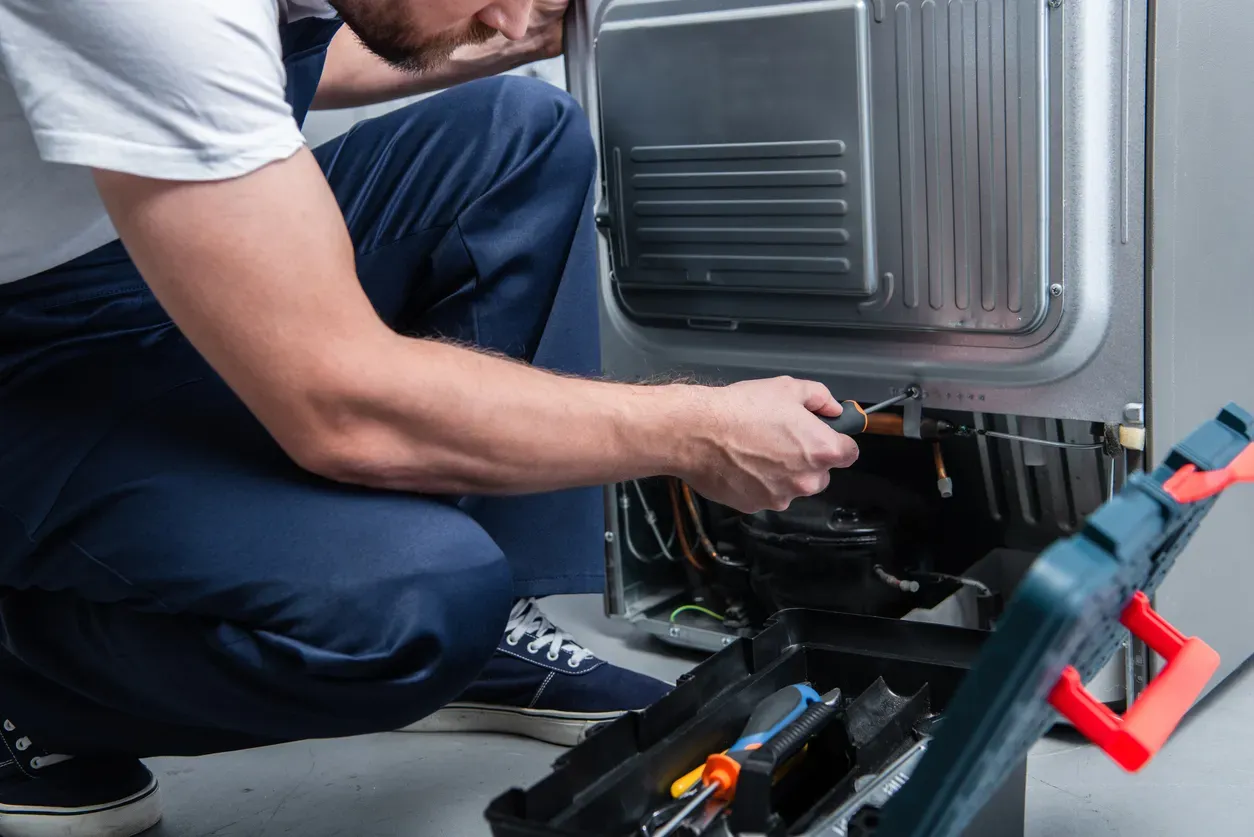
Why Is My Refrigerator Not Cooling?
Most cooling problems come down to a few key components. When one of them fails or underperforms, the whole system struggles to keep up. Here are the most common reasons a refrigerator stops cooling properly.
- Dirty condenser coils. Coils caked with dust and pet hair can't release heat efficiently, causing the entire cooling system to work harder and fall behind.
- Faulty evaporator fan motor. This fan moves cold air from the freezer into the refrigerator section. When it fails, the freezer stays cold but the fridge warms up.
- Thermostat problems. A defective thermostat may prevent the compressor from kicking on at all, even when the temperature rises.
- Compressor failure. The compressor is the heart of the cooling system. When it fails, the refrigerator can't cool at all and often makes unusual clicking or buzzing sounds.
- Refrigerant leak. Low refrigerant means reduced cooling capacity. You may notice the unit running constantly without the temperature dropping.
- Worn door gaskets. A torn or loose door seal lets warm air in continuously, making it nearly impossible to maintain a safe temperature.
Pro Tip:
Check your door seal by closing it on a piece of paper and pulling it out. If it slides free easily, the gasket likely needs replacing.
Simple Things to Check Before You Call
Before scheduling a repair, a few quick checks can help rule out easy fixes. Some cooling problems have surprisingly simple causes that don't require a technician at all.
- Confirm it's plugged in and the breaker hasn't tripped. It sounds obvious, but it's worth checking first.
- Verify the temperature setting. Your refrigerator should be set between 35°F and 38°F. Freezers should be at 0°F.
- Check the condenser coils. Located on the back or underneath the unit, dirty coils are one of the most common and easily fixed causes of poor cooling.
- Look for blocked vents. An overstuffed refrigerator can block internal air vents, preventing cold air from circulating properly.
- Check for heavy ice buildup in the freezer. Frost covering the back wall of the freezer is a sign the defrost system may be failing.
Pro Tip:
Clean your condenser coils every 6 to 12 months with a vacuum or coil brush. It's one of the simplest ways to extend the life of your refrigerator.
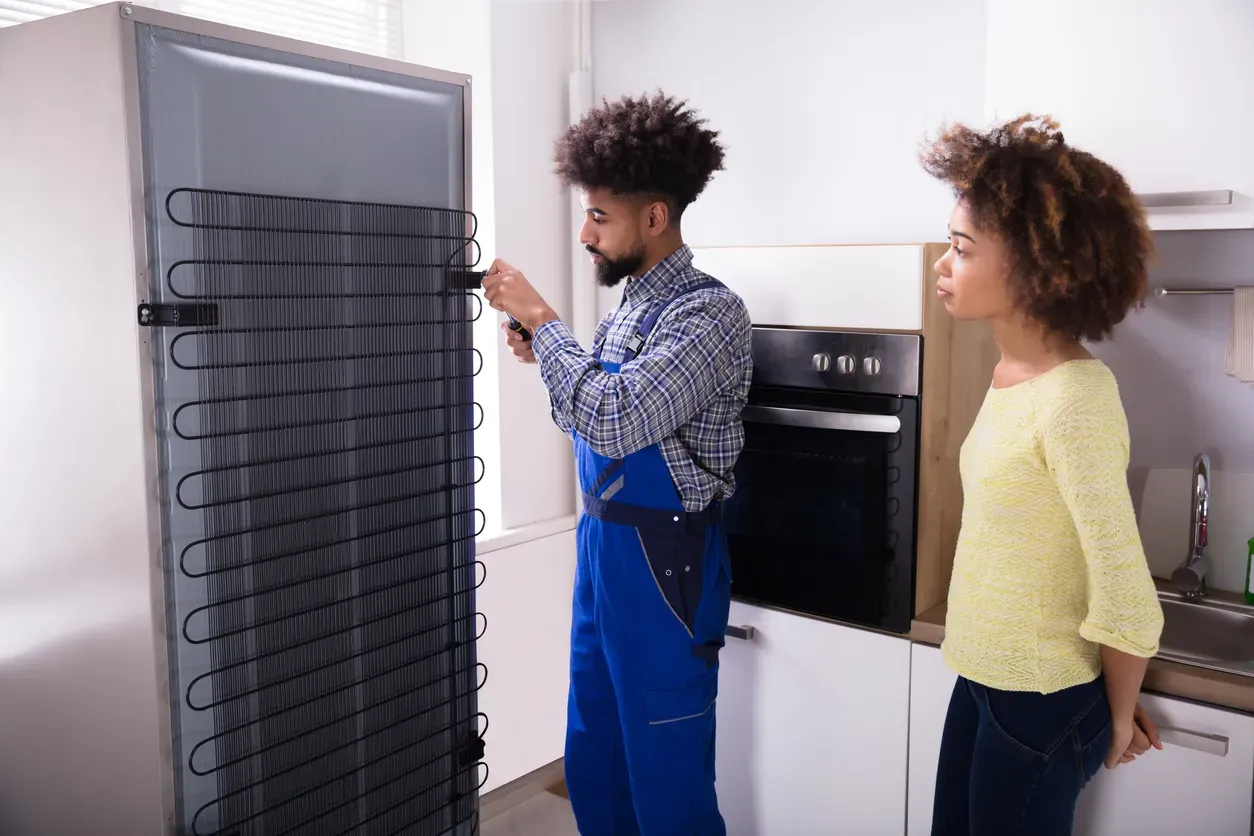
Signs It's Time to Call a Technician
Some problems are beyond a quick home fix. If your refrigerator stays warm for more than a few hours after checking the basics, it's time to bring in a professional. You should also call sooner if you notice any of the following.
- The freezer is cold but the fridge is warm. This usually points to a failed evaporator fan or a blocked air passage between compartments.
- The unit runs constantly. A refrigerator that never cycles off is working too hard and likely has an underlying problem.
- You hear clicking, buzzing, or loud humming. These sounds can indicate compressor or relay issues that need attention before they get worse.
- There is a chemical smell near the unit. This may signal a refrigerant leak, which requires a certified technician to diagnose and repair.
- Food is spoiling faster than normal. If things aren't staying fresh, the refrigerator isn't holding temperature even if it feels cool.
Waiting too long can turn a minor repair into a major one. Acting early almost always saves money.
Pro Tip:
If your refrigerator is more than 10 years old and needs a significant repair, ask your technician to give you an honest comparison of repair cost versus replacement value.

Repair vs. Replace: What Makes Sense?
Not every repair is worth making. A general rule of thumb is that if the repair cost exceeds 50% of the price of a comparable new refrigerator, replacement is usually the smarter long-term investment—especially for older units. That said, many common repairs are affordable and get your refrigerator running like new again in no time.
- Minor repairs are almost always worth it. Replacing a door gasket, thermostat, or evaporator fan is typically straightforward and cost-effective.
- Compressor replacement is a bigger decision. On an older unit, a compressor repair may not make financial sense compared to a new model with better efficiency.
- Age matters. A refrigerator under 8 years old is usually worth repairing. Older units should be evaluated case by case.
- We carry in-stock refrigerators. If replacement is the right call, we can help you find the right model and get it installed fast so you're never without a working refrigerator for long.
When Your Refrigerator Works, Everything Else Is Easier
A functioning refrigerator is one of those things you don't think about until it stops working. When it does, the impact on your household is immediate. Fresh food goes bad, routines are disrupted, and stress builds fast.
At Purcell Appliance Center, we work quickly to get your refrigerator back up and running—often the same day. Our technicians are experienced with all major brands and can diagnose most problems on the first visit. Whether it's a simple coil cleaning or a more involved repair, we'll give you a straight answer and a fair price.
Come visit us or give us a call. Bring your questions, your model number, and your situation. We're here to help with real advice for real homes. Call 217-352-7500 or stop in today to talk with our team.
Related Articles